A Turning Point (1996 - 2016)
A network of training institutes
Bahá’u’lláh’s vision of a united and better world, attracted a steady growth in membership of the global Bahá’í community, resulting in a community that reflected the ethnic and cultural diversity of the human race. However, creating a world that truly embraces diversity and to foster social relationships based on trust and sincere cooperation requires a fundamental change in consciousness and culture, and whole-of-society concerted effort to dispel ingrained prejudices and assumptions.
Thus in 1996, the international governing council of the Bahá’í Faith, the Universal House of Justice, launched the entire Bahá’í world on a global initiative that set its worldwide community on a 25-year journey of learning in action ── the establishment of a network of training institutes, to strengthen the foundation on which Bahá’u’lláh’s vision of the oneness of humanity – that we are one human family – can be fully realised. This set in motion a process of learning to raise capacity within every population to take charge of its own spiritual, intellectual, and material progress to effect the required individual and societal transformation.
The questions then before the Bahá’ís in Singapore was, how can a fledging community ── the individual, the institutions and the community ── relatively few in number, be raised up that will be capable of translating Bahá’u’lláh’s teachings into action and how can the learning be made scalable to enable more and more people to become protagonists in contributing to developing a spiritually and materially prosperous society?
For this to happen a shift in culture of how we think, express, and behave will need to occur.
Central to this shift is the recognition of the inherent dignity and nobility in each of us; and that the development of our inherent talents, skills and moral qualities, and service to humanity are inseparable facets of life ── the operation of a twofold moral purpose of personal transformation and that of contributing to the societal well-being.
It is through the agency of the training institute, which emerged from the global efforts, that the fundamental framework and required capacities are being developed. Grounded in universal Bahá’í principles and concepts, and action-based learning from the grassroots, its structured and systematic educational process and curriculum allow individuals of all ages and from all walks of life and background to participate. Through the study of the courses, the lessons find practical application in one’s neighbourhood – in learning what it means to build a cohesive, resilient and vibrant community. As more people become committed to this process, a system and network of intergenerational mutual support and assistance organically emerges.
The Beginning of a Systematic Process of Learning
This meant learning to create natural third spaces where residents, regardless of faith or background, could come together to:
- engage in fundamental conversations about meaning of life and purpose
- build genuine supportive friendships through prayers and acts of volunteerism
- learn practical skills and qualities necessary for community-building
- support the intellectual, moral and spiritual education of children and youth
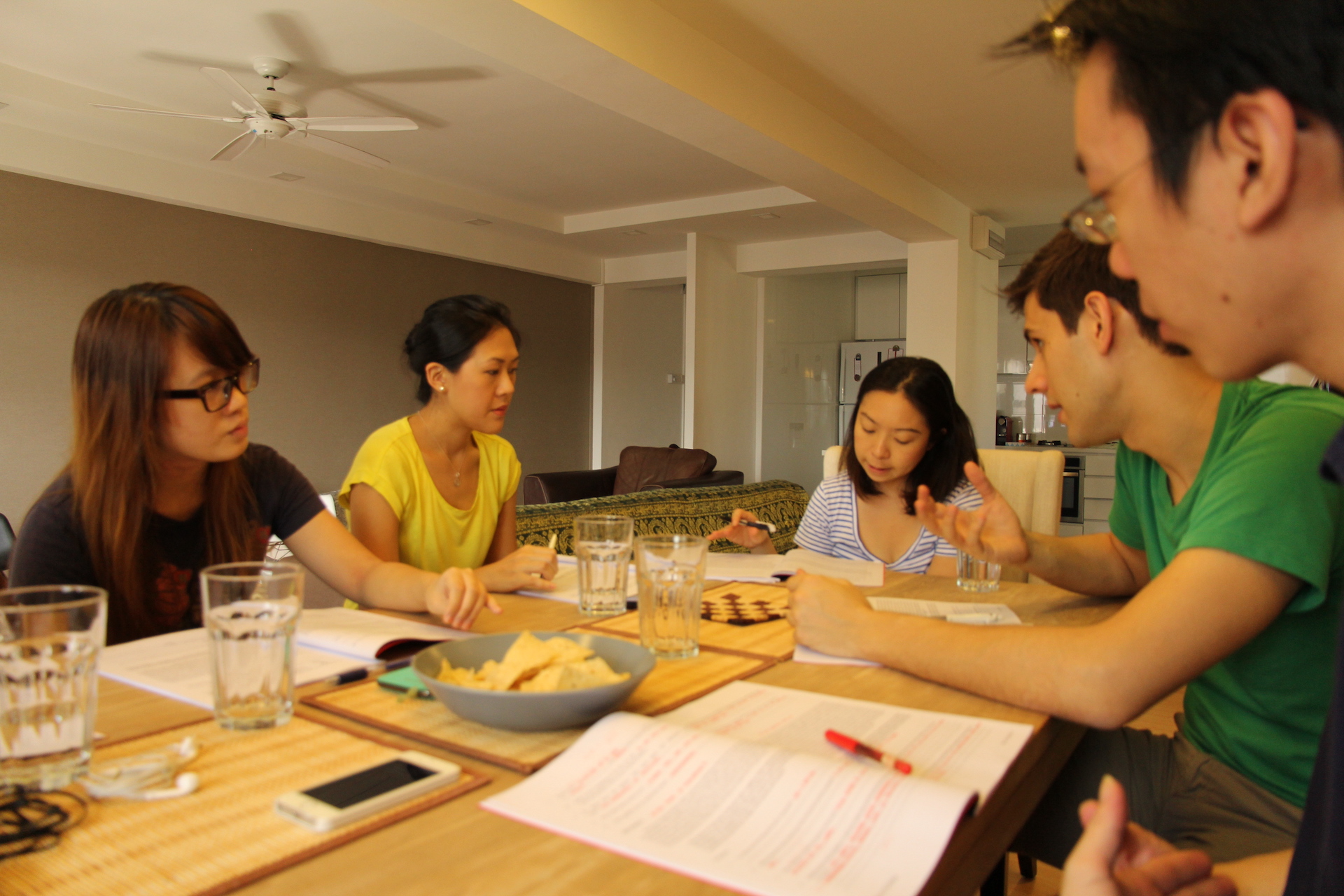
The process of learning began initially within the Bahá’í community and their close friends.
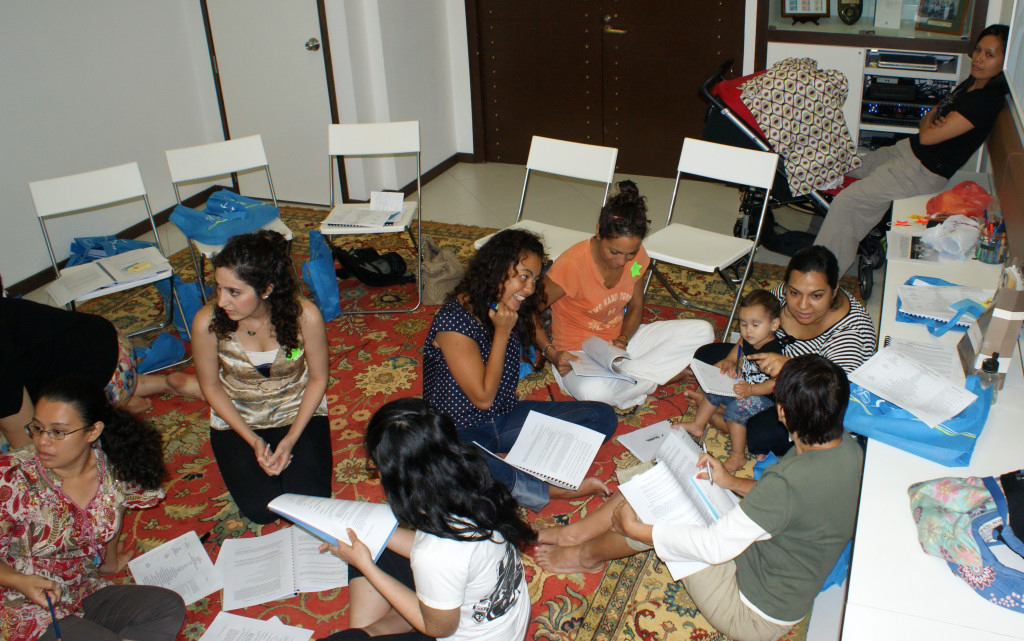
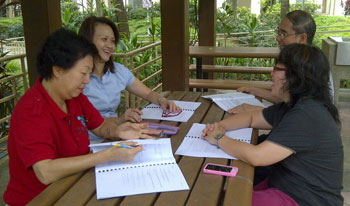
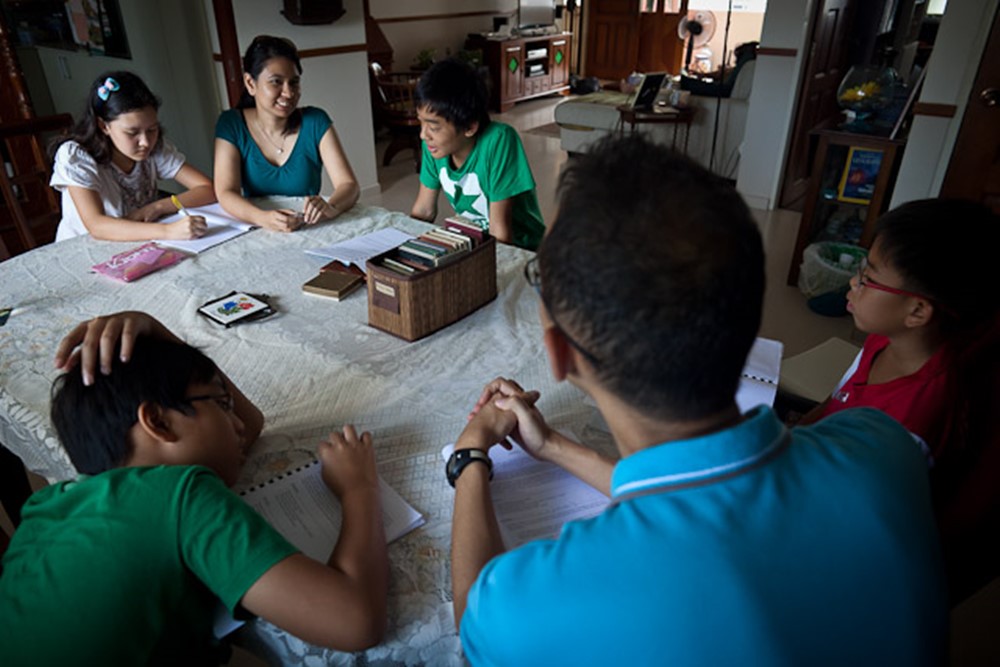
Over time, the reach of the training institute programme became wider and neighbourhood focused. Small groups began meeting in homes, coffee shops, and community spaces studying together, reflecting on social needs, and taking action together. These efforts encouraged a culture of mutual support, where individuals helped one another grow in confidence, purpose, and shared responsibility.
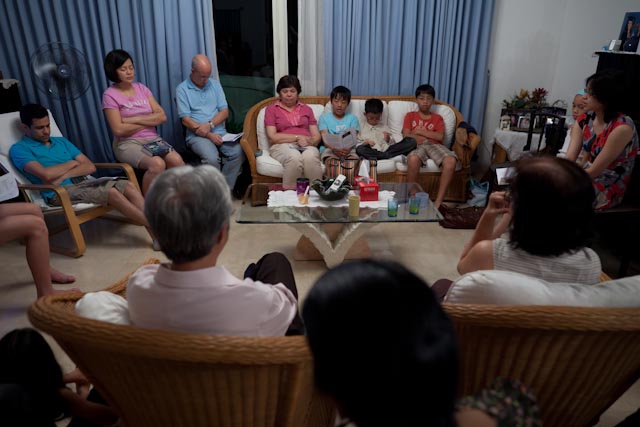
Gathering for worship at a home
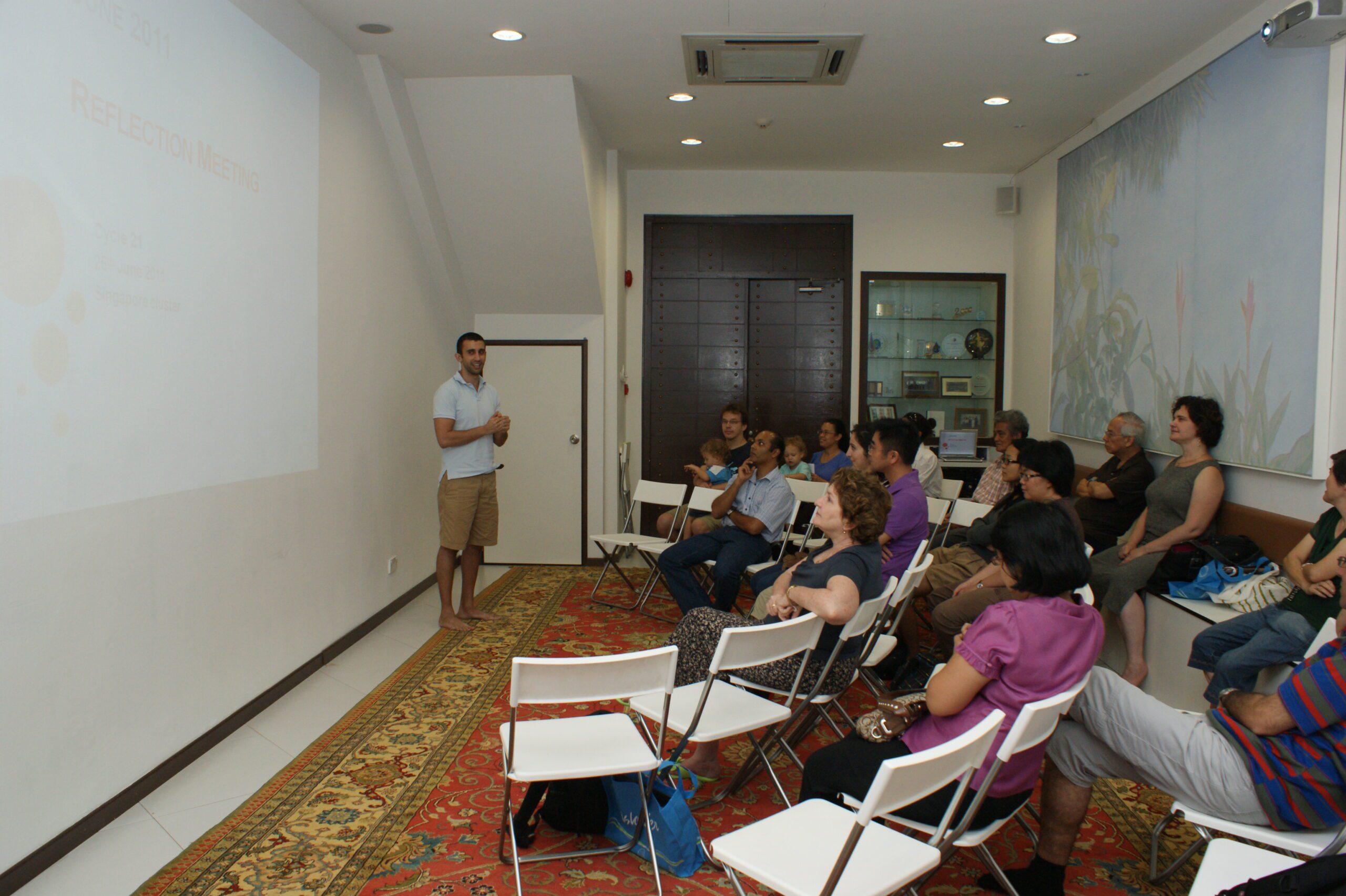
Building Communities at the Grassroots
By 2015, Singapore’s Bahá’í community had accumulated experience to be able to support multiple neighbourhood-based initiatives simultaneously. The city was thus thoughtfully organised into five geographic areas, which allowed:
- closer support at the grassroots
- shared learning between neighbourshoods
- greater opportunity for everyone to take ownership
This shift marked a new chapter and culture: one in which a widening circle of individuals, families, friends, fellow residents are becoming active contributors to the well-being of their own neighbourhoods.
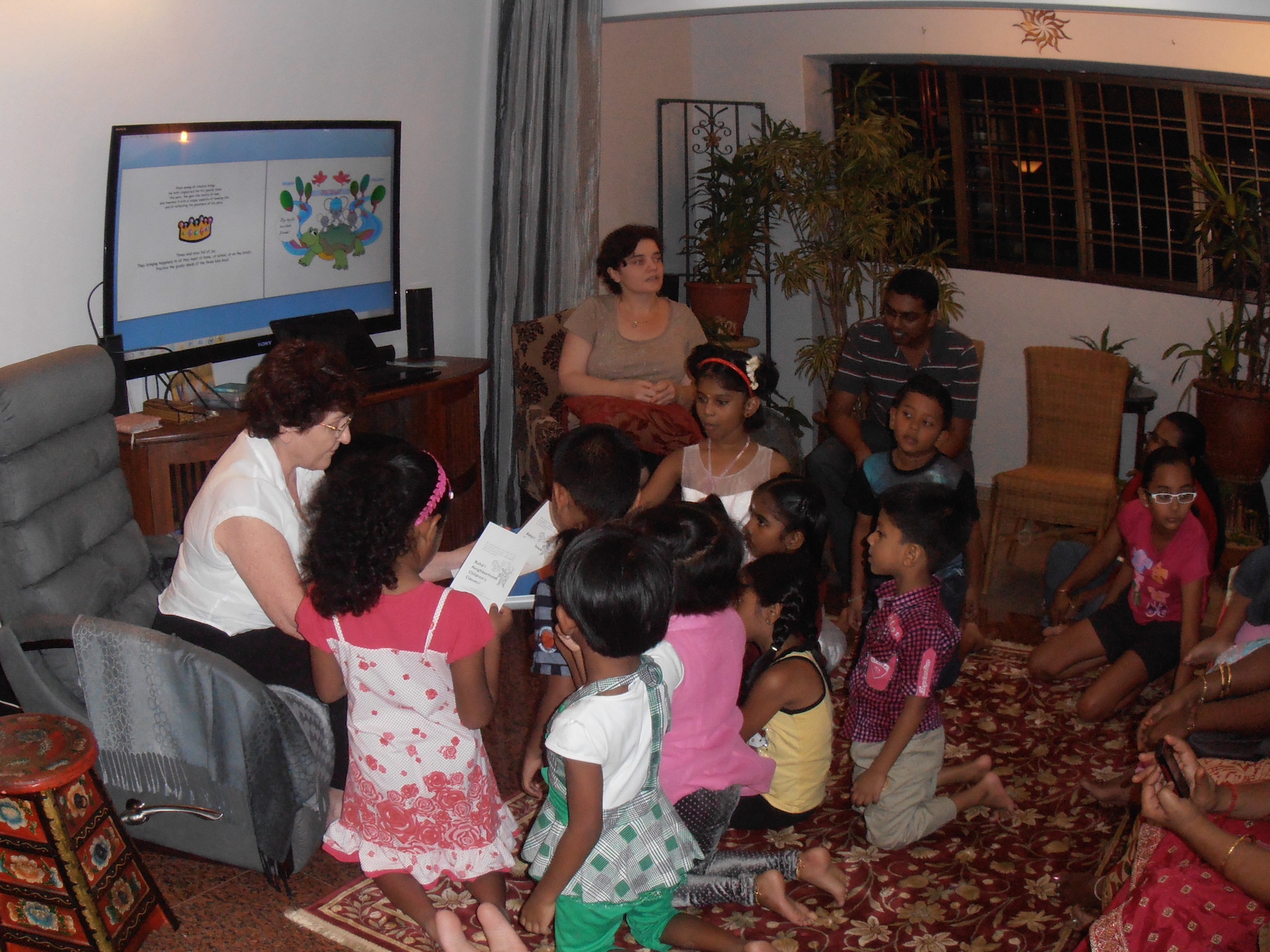
Children's Class in the Woodlands Neighbourhood
Widening Embrace of Growth
The journey of over two decades that began with one conversation, one friendship, one neighbourhood at a time continues today along a projected path that accommodates a widening embrace of different paces and strides.
The Bahá’í community in Singapore remains committed to:
- fostering meaningful connections
- nurturing hope and purpose among children and youth
- supporting spaces of reflection and volunteerism
- and strengthening the bonds that hold communities together
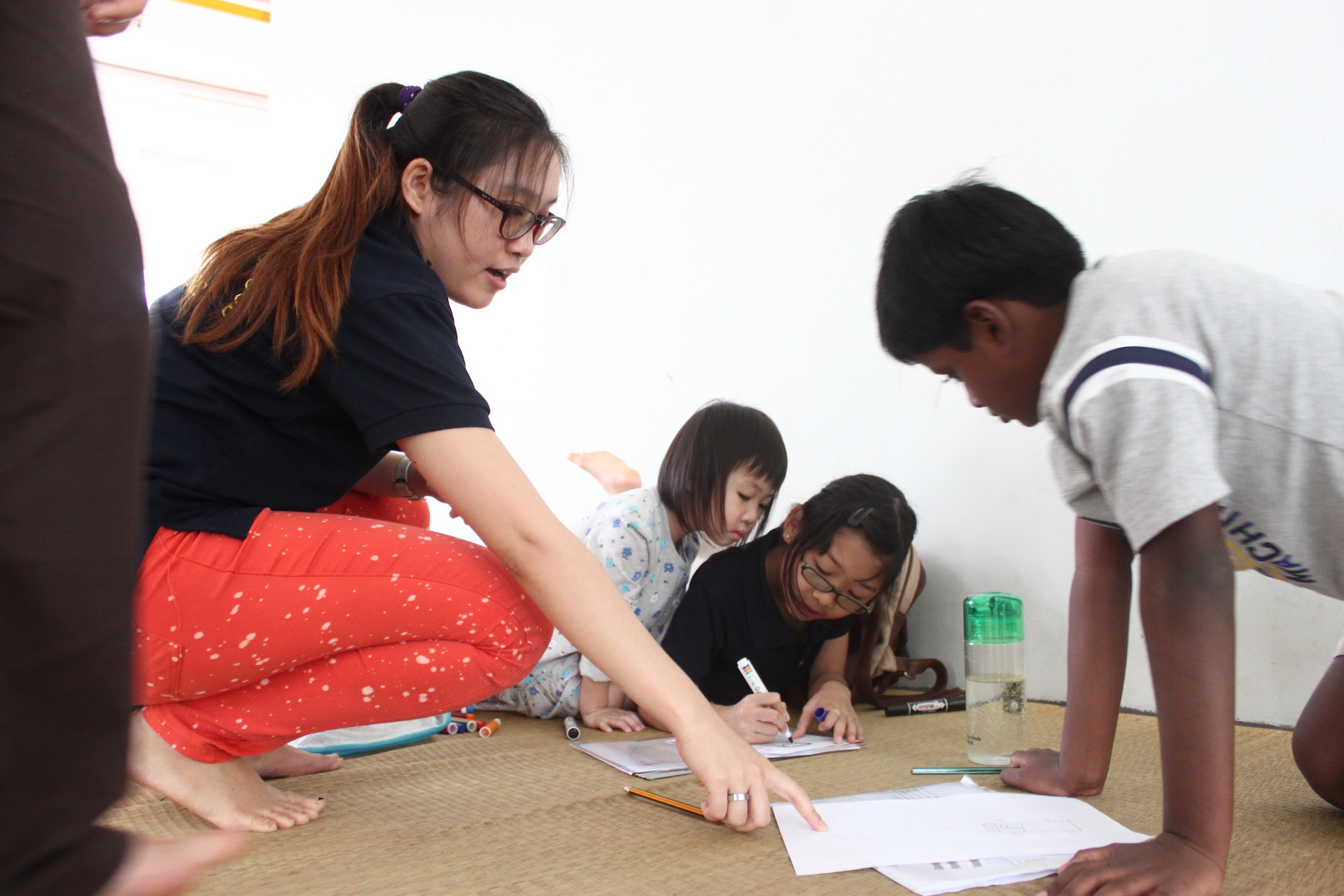
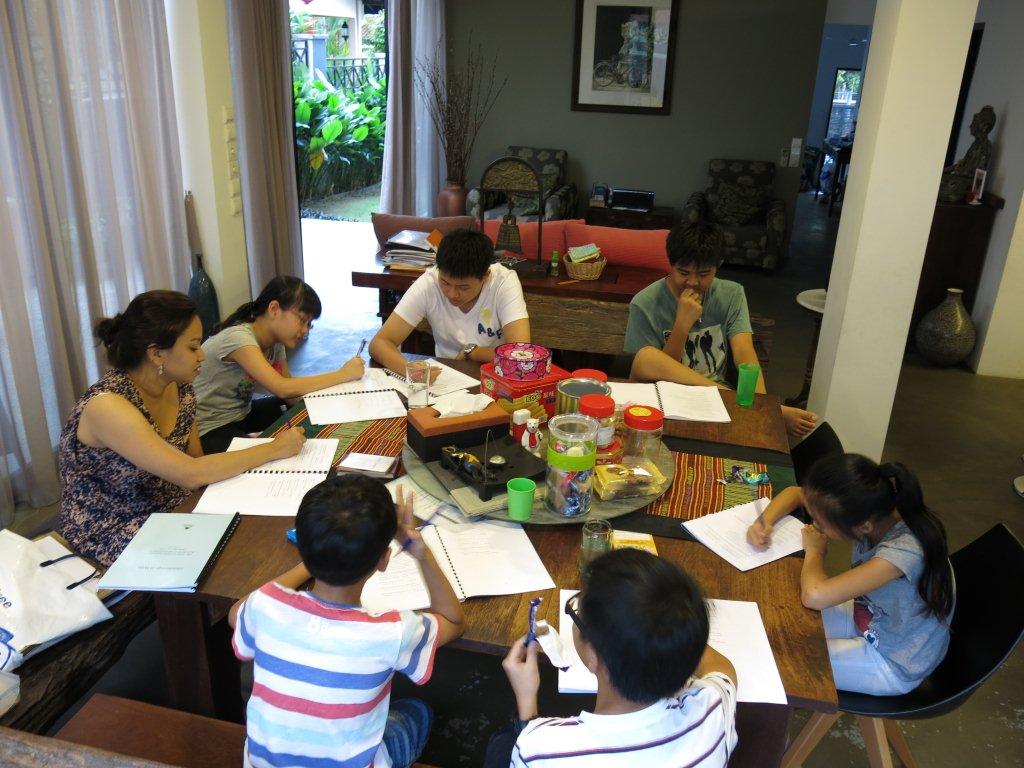
Junior Youth Group in the Pasir Ris Neighbourhood